 |
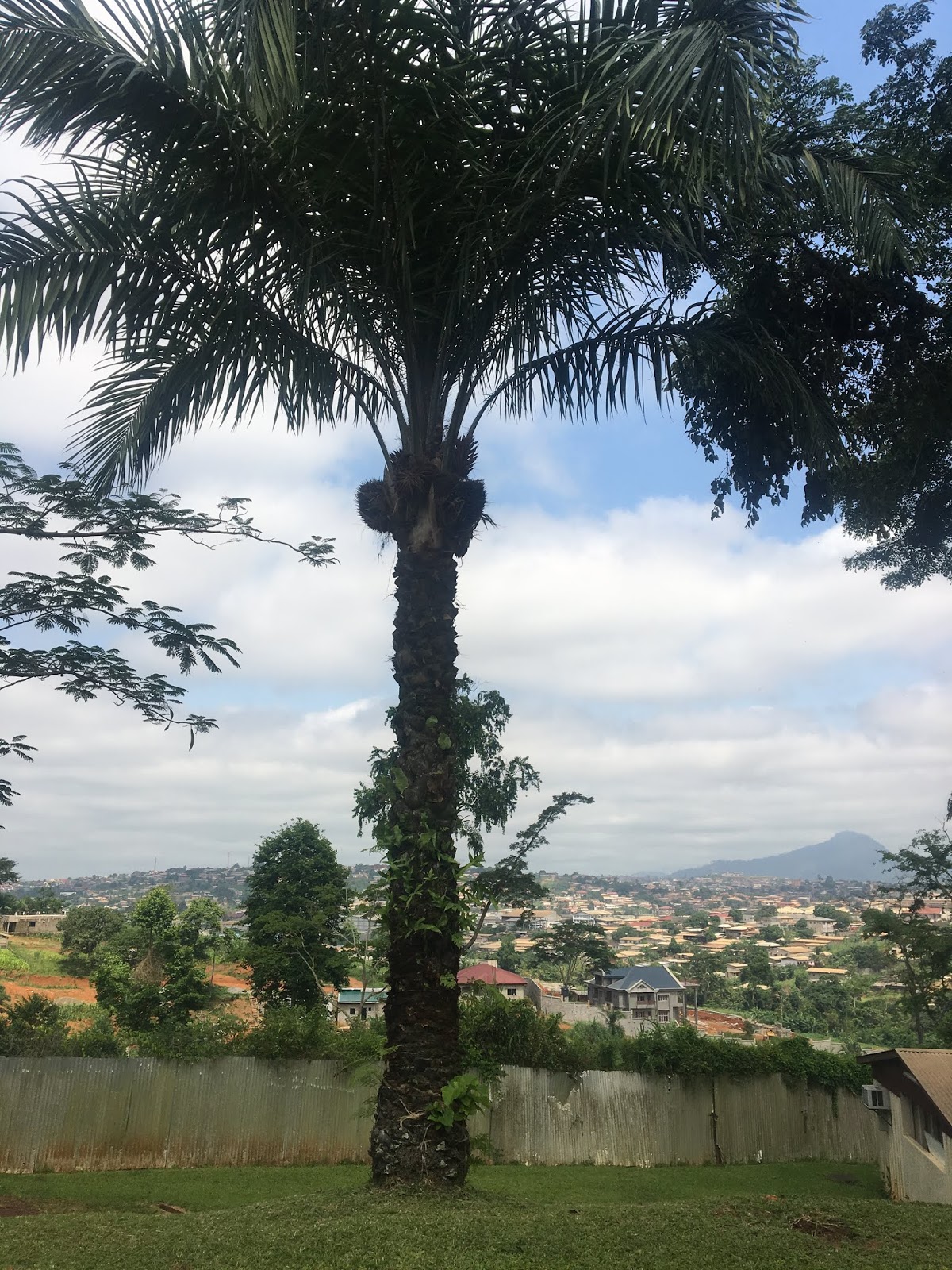
| The view from my hotel in Bamenda. I remember wondering if trees and landscapes like these shaped the perceptions and languages of indigenous speakers. |
“What is truth?” Pilate infamously enquired. It’s a topic that’s been wrangled with, debated, scoffed at and sometimes embraced. I fall into the category of believing that there is objective truth; right and wrong, fact and fiction. But, I also think that in an effort to defend objective provable truth some of us can fall prey to the fallacy of equating relativism with perspective.
Do soccer teams lose matches? Yes. Do countries lose wars? Yes. It’s objectively true. It doesn’t depend on my feelings, my beliefs, my hopes. It happens. However, does one person’s experience of loss, victory, confusion have to match mine? Do we .each do |x| (another coding pun) just like the next person? Of course not. Can I view the experience as an individual or as part of an individual culture that differs from yours? Yes. Does that make the reality of these experiences any less true? No. Objectivity and perspective are not at odds in the same way that truth and relativism are.
Seeing something from a different angle or feeling something unique doesn’t make the reality less true. It just makes me different, in some ways, from you. And that’s ok, and actually, beautiful.
When I began to study the Ring languages of Grassfields Bantu, I realised that here was a group of people with whom I had so much in common, we ate together, shared laughs and empathised with each others struggles. Yet, the way that they speak about the world, the way they form words, categories and sentences was so different from what I was used to.
One example was the semantic feature of [Shape] in their languages. Objects I viewed as distinct, bounded, individuated things like apples, chairs and ants, they viewed as masses to be individuated, selected from the concept of chair-ness and given a boundary with some morphological tool of their language. Now, before you think this is due to some lack of education or primitive form of knowledge…may I remind you of Plato’s forms (aspatial substances) and the “chair-ness” of a chair? Or, in simpler terms, what is hair? Is it a mass on your head, or does it consists of numerous, individuated hair-like strands? The speakers of Grassfields Bantu have developed a complex noun class system that allocates nouns to groups based on categories such as animacy, plurality and, some argue (myself included), shape/boundedness. These speakers have stopped me in my tracks and cause me to see the same world from another angle.
Grassfields Bantu taught me to stop and think. It taught me to observe the multi-faceted nature of a given diamond of objective truth. Maybe there’s more than just my perspective, or yours.

 Ciara Anderson, PhD